Pillars not only support of building but also present the spirit of the space. For example, dai koku bashira (Japanese, the main pillar) or called spiritual pillar in Japanese architecture. Negative space can be seen in the cloister. Following this, one can see architects use the visible image to present invisible image. This concept is parallel to Weng’s long-term practice – Expansion Painting. Both Weng and the architects are interested in the invisible phenomenon, and ‘gathering’ is the effect they present.
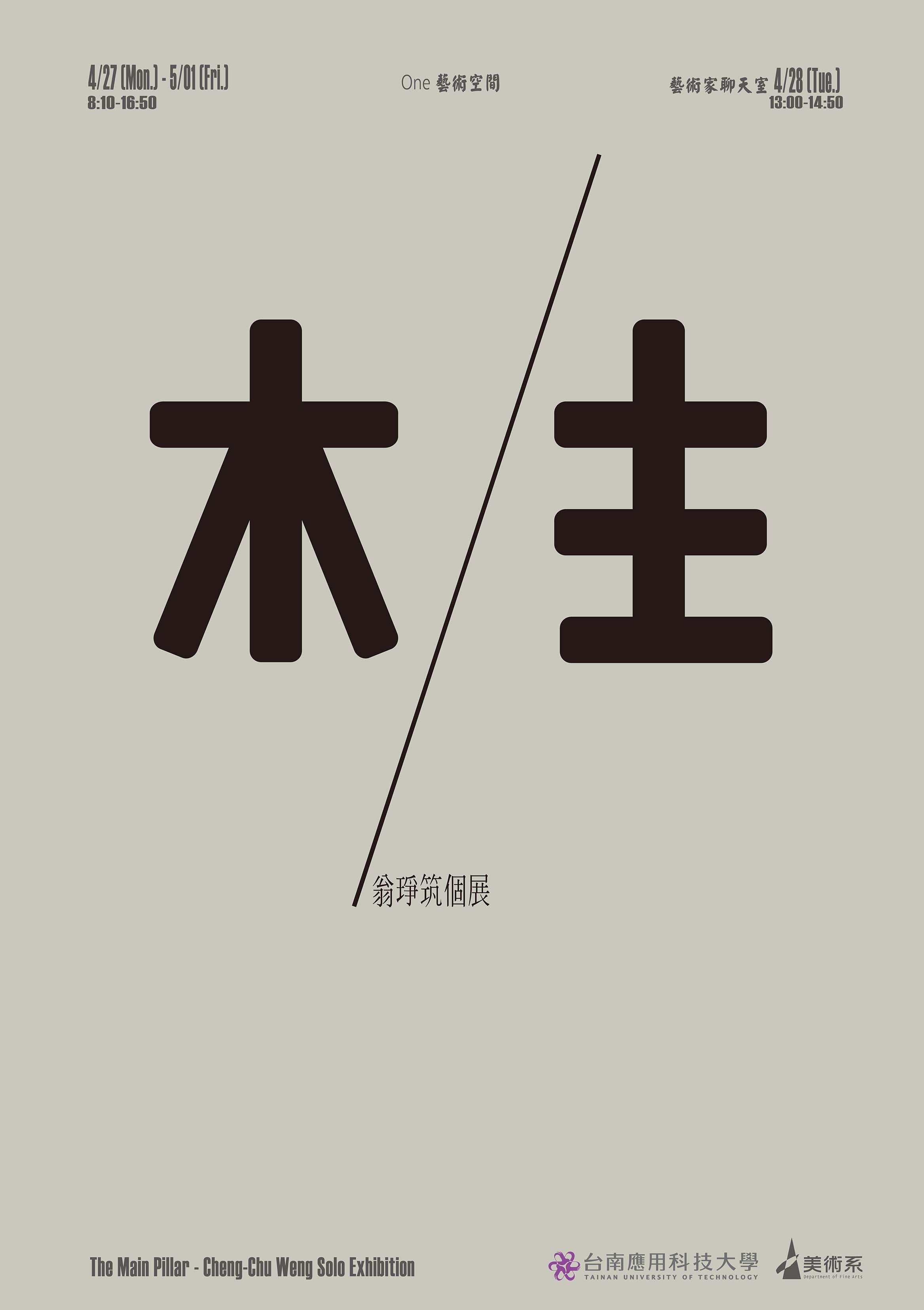
The Main Pillar – Cheng Chu Weng Solo Exhibition presents Weng’s observation of One Art Space. Weng tried to present the strange structure of the space, particular three-pillar. The function and spiritual of them are doubtful; such ambiguous relationship attracts Weng’s attention. The relationship between three-pillar and the space seems intertextual relation with dai koku bashira in Japanese architecture. Under Weng’s reading of the space, space itself shows the feature of Taiwan multi-culture, for instance, the combination between Western curve wall and Chinese pillar or dai koku bashira in Japanese architecture. The mixed Western and Eastern cultures also can be seen in Weng’s practice – Expansion Painting. The Main Pillar same as other of Weng’s works creates an effect of ‘the structure of ambiguity’. The Main Pillar was placed in-between the pillars to blur the original structure of the pillar. Moreover, the fabric is set in motion when people pass the work; such phenomena draw out one’s body consciousness in between pillar and pillar, the pillars and space. Equally, the title of this work/exhibition, The Main Pillar as the ‘functionless’ pillar and ambiguous the relationship between subject and object.
Expansion painting developed through considerations of the origin of the objects and spaces as well as different levels of body-conscious in spaces within apply painting elements/medium—the scale of the artworks from small as punctuations to large installations that full filling the space. Expansion painting situates within current debates of art theory and history and within the philosophical frameworks of both post-structuralism and phenomenology. Furthermore, it offers a new perspective of ‘Painting in the Expanded Field’, which takes one further than modern and postmodern debates, to consider the current practice in relation to painting as an act, pertaining to its ‘origin myth’. The practice articulate through making and thinking, painting then, therefore, becomes a model of thinking and making.